The true story of how Race’n’Chase became Grand Theft Auto
Grand Theft Auto was born not from intention, but from error.
Imagine it’s 1995, and a small group of developers are wrestling with a game that refuses to come together.
In Dundee, Scotland, the team at DMA Design spent their days building and rebuilding a top-down driving game called Race’n’Chase. On paper, the idea makes sense: fast cars, heavy crashes, police pursuit folded into competitive play. It feels like a project that should find its footing quickly.
Instead, each new build reveals another problem. A game with a concept this simple crashes without warning, and features break before the team can properly test them. Cars drift and slide, never quite responding the way players expect. What should feel sharp and exciting instead feels unstable, constantly slipping out of the player’s grasp.
The problem proves deeper than broken code. Race’n’Chase lacks direction. Progress stalls. Confidence wanes. With each iteration, the game drifts further from what it was meant to be.
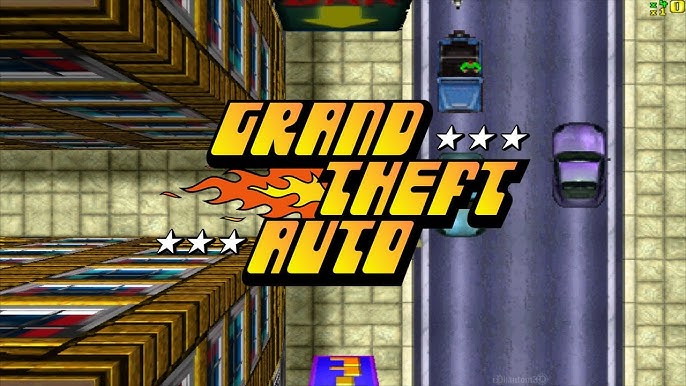
The answer does not arrive as a bold new idea. It emerges through exhaustion and instability, and through one unexpected bug that changes how the game feels to play—transforming Race’n’Chase into Grand Theft Auto.
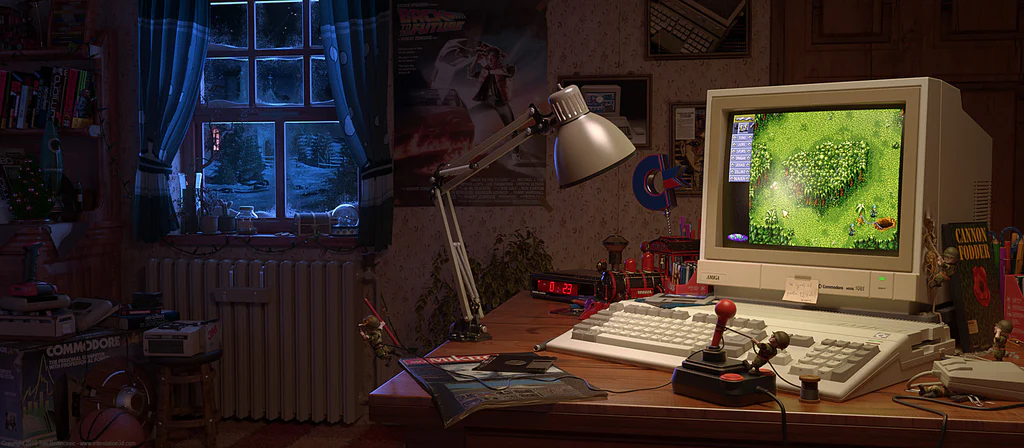
From Race’n’Chase to Grand Theft Auto
According to surviving design documents from 1995, Race’n’Chase was pitched as a “fast,” “fun,” and “addictive” multiplayer driving game, focused on racing, crashing, and vehicle chaos. But those very same documents make one thing clear: it was never only a racing game.
Even in its earliest form, Race’n’Chase already contained mechanics that would later define GTA:
- Players could steal cars
- Players could exit vehicles
- Player actions could draw police attention.
The DNA of crime, escalation, and consequence was already present. What the project lacked was cohesion—and more importantly, a clear reason to keep playing.
A Project Close to Cancellation
By the time producer and creative manager Gary Penn—who worked at DMA Design during the development of the original GTA and later recounted its troubled production in an interview—became deeply involved, the project was in serious trouble.
In an interview with Tristan Donovan, published on Game Developer, Gary Penn described Race’n’Chase—the early project that would become Grand Theft Auto—as “a real mess,” and said publisher BMG Interactive was close to cancelling it outright.
Two problems stood out:
- Stability: Frequent crashes prevented meaningful testing and iteration.
- Driving feel: Car handling was poor—fatal for a game built entirely around driving.
This was not the early version of something inevitably great. It was a project losing momentum, increasingly unable to justify its own survival.
The “Psycho Cops” Bug That Changed Everything
The turning point came from a bug—but not in the mythologized way it’s often told.
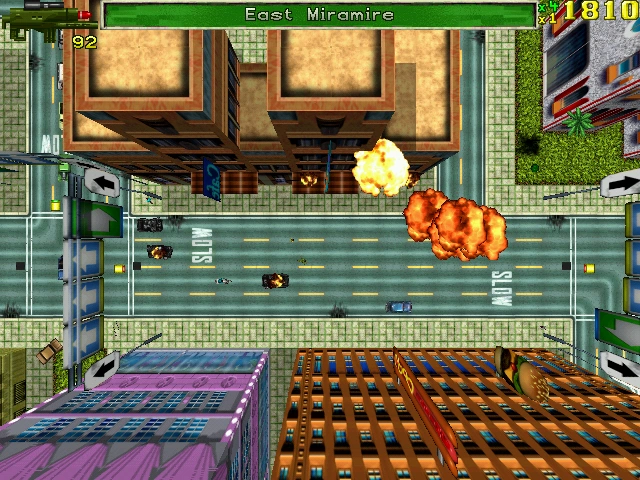
During development, a routing and pathfinding error caused police AI to behave aggressively and unpredictably. Instead of maintaining distance or following orderly pursuit logic, police cars attempted to drive through the player, resulting in chaotic, violent ramming chases.
Penn recalls that the effect was obvious as soon as it appeared. A mechanic designed to impose order had instead introduced danger. Police encounters shed their routine and became volatile, turning every pursuit into a test of survival. The excitement wasn’t rooted in realism, but in opposition—in the sense that the game itself was fighting back.
Penn later told Game Developer that the effect was “awesome.” The behavior was technically wrong but creatively right, and instead of removing it, the team allowed it to redefine the game.
In breaking the rules, the game discovered its identity.
What the Bug Actually Proved
The bug did not create Grand Theft Auto. It uncovered it.
The game already contained the pieces: crime, pursuit, and player freedom. What it lacked was clarity. The bug did not introduce something new. It exposed a relationship that had always been there.
Penn explained in the same interview that the project shifted away from rigid mission structures and toward open-ended “general play.” Messing around, provoking chaos, and surviving the consequences became the point.
He summarized the thematic pivot with a blunt observation:
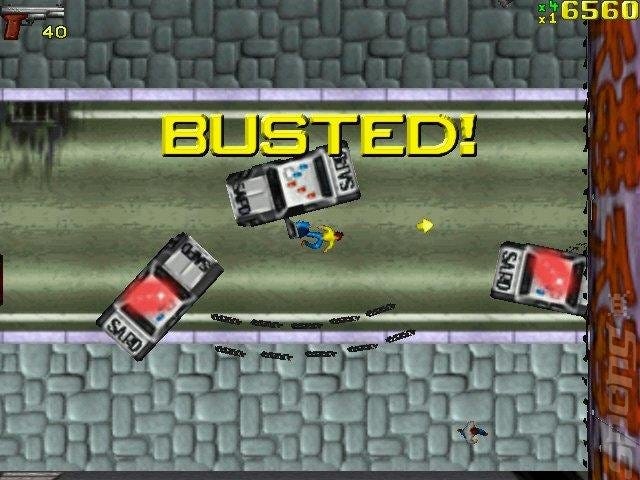
“Nobody wants to be the cop. It’s more fun to be bad.”
That realization—placing the player firmly on the criminal side—became the foundation of Grand Theft Auto as a series.
From Features to Focus
The origin of Grand Theft Auto is not a fairy tale about accidental genius.
It’s a case study in iteration under pressure:
- A game with the right ideas but the wrong execution
- A project nearly canceled due to technical and design failures
- A development team willing to recognize when chaos was more fun than control
The police AI bug didn’t invent GTA. It clarified what GTA should be.
And once that clicked, the franchise had a direction it’s never really abandoned.
Looking Back
Grand Theft Auto didn’t emerge from a single lucky mistake, but from a long process of discovery. Race’n’Chase already contained the ideas of crime and consequence; failure—and one well-timed bug—revealed what players actually enjoyed.
That shift toward freedom, provocation, and surviving chaos remains GTA’s foundation today.