AAA game development has entered an era where budgets rival and sometimes exceed Hollywood blockbusters. As production costs climb, studios face greater financial risk while chasing realism, scale, and long-term player engagement.
From decade-long development cycles to global marketing campaigns and live-service ambitions, the games below represent the highest financial investments the industry has ever seen. Listed from most expensive to least, each shows how far modern game development has stretched.
Game-by-Game Cost Breakdown
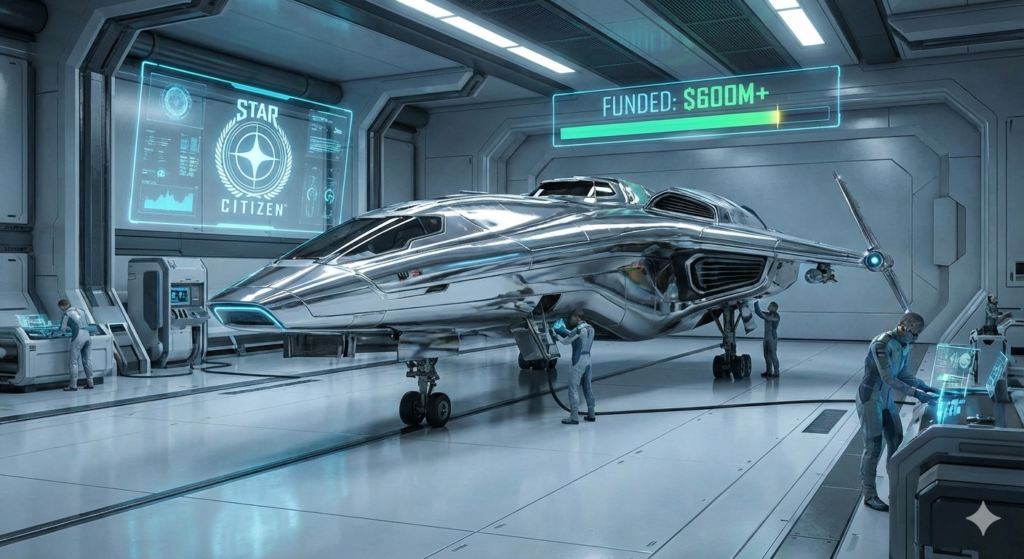
1. Star Citizen
Estimated budget: $600 million+
Developer: Cloud Imperium Games
Platform: PC (in development)
Star Citizen is a game–funded almost entirely through crowdfunding. With no fixed release date and a constantly expanding scope, its budget has grown year after year.
The project aims to deliver unprecedented detail in space simulation, from fully explorable ships to persistent online systems. While its ambition is unmatched, it also highlights the risks of unchecked scope and prolonged development.
For players, Star Citizen represents both the promise and danger of limitless funding: innovation without deadlines, but no guaranteed finish line.
2. Red Dead Redemption 2
Estimated budget: $370–540 million
Developer: Rockstar Games
Platforms: PS4, Xbox One, PC
This project spent nearly eight years in development, with thousands of developers contributing across multiple Rockstar studios. The budget reflects extreme polish: detailed animations, cinematic performances, and a world designed to feel alive at every moment.
The result was critical acclaim and strong sales but also industry-wide conversations about crunch and sustainability.
Red Dead Redemption 2 shows how artistic ambition can push budgets to the edge of practicality.
3. Cyberpunk 2077
Estimated budget: $436 million+
Developer: CD Projekt Red
Platforms: PS4, PS5, Xbox One, Xbox Series X|S, PC
A significant portion of Cyberpunk 2077’s budget went toward marketing—and later, post-launch fixes. Its troubled release turned the game into a cautionary tale about overpromising and shipping under pressure.
Although extensive updates eventually restored player trust, the total cost illustrates how failure at launch can dramatically inflate a project’s true budget.
4. Grand Theft Auto V
Estimated budget: $265 million+
Developer: Rockstar Games
Platforms: PS3, PS4, PS5, Xbox 360, Xbox One, Xbox Series X|S, PC
At launch, Grand Theft Auto V was the most expensive game ever made. Its budget covered both development and one of the largest marketing campaigns in gaming history.
With GTA Online, Rockstar turned a single release into a decade-spanning revenue engine, proving that massive budgets can succeed when paired with long-term player engagement.
5. The Last of Us Part II
Estimated budget: ~$220 million
Developer: Naughty Dog
Platforms: PS4, PS5
This sequel pushed narrative-driven design to blockbuster levels. High-end motion capture, detailed environments, and lengthy production contributed to its cost.
Its budget highlights a growing trend: even linear, single-player games now require massive investment to meet modern expectations.
6. Destiny
Estimated budget: ~$140 million (initial release)
Developer: Bungie
Platforms: PS3, PS4, Xbox 360, Xbox One
When Destiny launched, its budget was staggering for a new IP. Bungie invested heavily in online infrastructure, shared-world systems, and long-term expansion plans.
While its early content drew criticism, Destiny laid the groundwork for modern live-service design that now dominates AAA development.
When Bigger Budgets Change the Way Games Are Made
Rising development costs don’t just affect studios, they directly shape the games players receive.
As budgets climb into the hundreds of millions, publishers become more cautious. Fewer risks are taken, timelines stretch longer, and expectations grow heavier with every reveal trailer. A single misstep can lead to delays, backlash, or long-term damage to a franchise.
For players, the upside is clear: richer worlds, stronger performances, and longer post-launch support. But the trade-off is real. Experimental ideas struggle to get funding, smaller teams are squeezed out of the spotlight, and launches carry far more pressure than ever before.
These costs raise the question of sustainability, not just whether studios can afford to make games this big, but whether the model can survive repeated high-stakes bets.
The High-Stakes Future of AAA Gaming
The most expensive AAA games ever made reflect an industry pushing technical ambition to its limits. Massive budgets enable breathtaking scale and realism, but they also magnify risk, pressure, and consequences when expectations aren’t met.
As development costs continue to rise, success may no longer come from being the biggest or most expensive. Instead, the future of AAA gaming may depend on smarter production, sustainable workflows, and delivering focused experiences that earn long-term player trust, not just opening-week sales.
For players, that balance will define whether blockbuster games continue to evolve, or become increasingly rare gambles in an unforgiving market.