Explore the top game engines in 2026, their strengths, limitations, and the market trends shaping modern game development.
Overview: Game Engines
From building vast fantasy worlds to powering online casinos, game engines are the backbone of modern game development. They turn ideas into real interactive experiences, and choosing the right one can shape the entire outcome of a project. In this article, we take a closer look at the most widely used game engines, exploring their strengths, limitations, and the broader ecosystem they belong to.
Game engines are platforms to build video games. They integrate art, physics, sound, logic, and code into a unified system, enabling developers to bring their game ideas to life.
The Game Engine Market
The game engine industry is a billion-dollar business.
According to Fortune Business Insights, the global market was valued at $3.43 billion in 2025 and is projected to reach $10.34 billion by 2034, growing at a steady 13.1% annually. North America alone accounted for over 35% of the market share in 2025.
How Many Game Engines Are Out There?
Countless games have been built over time—and new ones emerge daily. The number of game engines behind them varies depending on the source:
- Around 603 engines listed on Game Companies platform
- 272 engines registered in the Game Engines Database
- Between 200–300 engines cataloged on Wikipedia
- Nearly 800 engines identified in this research
Too Many Game Engines, Too Few Winners
Despite the sheer number of engines, the market is heavily concentrated among a few key players. As we explored in a previous article a large portion of games today are built using Unity and Unreal Engine.
Data from The Big Engines Report (2025), based on 13,000 games available on Steam, shows:
- Unity leads in the number of games released
- Unreal Engine and custom engines lead in total sales
- Godot, RPG Maker, and GameMaker make up over 10% of releases but only around 2% of sales
This highlights a key industry dynamic: accessibility vs. commercial performance.
The Role of Custom Game Engines
Custom engines, built in-house by major studios, once dominated the industry. Their influence has declined, but they remain central in AAA development because they offer:
- Full technological control
- Optimization for specific gameplay needs
- Technical differentiation from competitors
Notable examples include:
- Frostbite (EA – FIFA, Battlefield)
- RE Engine (Capcom – Resident Evil)
- Anvil Engine (Ubisoft – Assassin’s Creed)
Meanwhile, indie and mid-sized developers tend to rely on more accessible, ready-to-use engines.
Strengths and Weaknesses of Notable Game Engines
Unreal Engine: High-End Graphics and AAA Power
Developed by Epic Games, Unreal Engine remains a top choice for developers targeting high-end production.
Why it stands out:
- Industry-leading graphics and realism
- Blueprint visual scripting reduces the need for heavy coding
- Integrated environment with comprehensive tools
But there are a few things to keep in mind: Unreal Engine requires high-end hardware to run smoothly, and it has a steeper learning curve compared to some other engines.
Unity: Versatility and Accessibility
Created by Unity Technologies, it is widely adopted across the gaming industry.
Strengths:
- Beginner-friendly and intuitive
- Cross-platform support (mobile, console, VR/AR)
- Flexible for 2D and 3D development
That said, Unity does have some limitations. It can be less competitive when it comes to cutting-edge graphics, and its performance may lag in large-scale AAA projects.
AI in Game Development: The Rise of NVIDIA ACE
AI is rapidly reshaping how games are developed, and game engines are evolving alongside it, as we discussed in our recent article.
One of the most important developments is NVIDIA ACE, launched in 2024 by NVIDIA which:
- Generates intelligent, interactive in-game characters
- Handles character dialogue, voice, behavior, and animation
- Enables realistic, dynamic in-game interactions
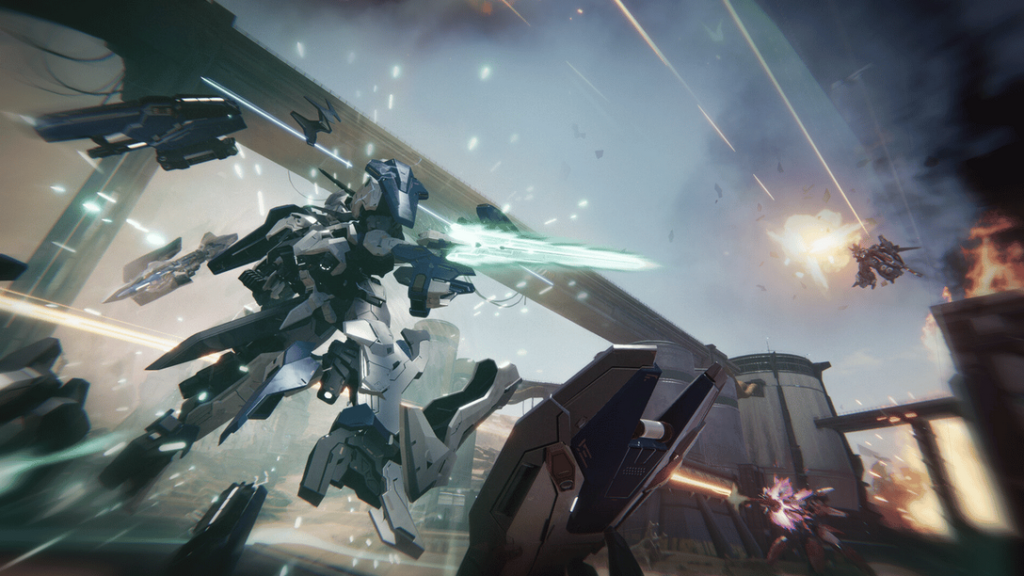
Mecha Break is among the first games to implement this technology.
Choosing the Right Engine for Your Game
There is no single “best” game engine. Each project has different requirements. Testing multiple engines and evaluating workflow compatibility is the most reliable approach—but it takes time.
Key factors to consider:
- Project scope
- Target platform
- Desired graphical quality
Best Game Engines for Indie Developers in 2026
- Unreal Engine – Best for high-fidelity 3D projects; Blueprint system allows complex mechanics without coding; ideal for realism and AAA-style experiences
- Unity – Highly versatile, widely supported, strong community resources; suitable for both 2D and 3D
- Godot – Free and open-source, high control and flexibility, excellent for 2D and increasingly for 3D
- GameMaker Studio – Ideal for 2D development, easy to learn, proven success in indie games
Other tools worth considering:
- Construct 3 – rapid prototyping, no coding required
- Defold & Kaplay – lightweight, efficient, developer-friendly
Choosing a Game Engine Is a Strategic Decision
Selecting a game engine is both a technical and strategic choice.
- Indie developers may find Godot offers the best balance of accessibility, power, and freedom.
- Developers with ambitious projects will benefit from the maturity and industry adoption of Unreal Engine or Unity.
Ultimately, the options are many, and the possibilities even more. With the arrival of AI tools such as NVIDIA ACE, engines evolve continuously, but the central challenge remains: choosing the right engine for the right idea.