Generative AI is reshaping game development — from workflows to budgets. Here’s a clear look at the growing debate around art, creativity, and ethics in the gaming industry.
Introduction
With GenAI’s rapid acceleration into video game development, studios now use AI tools to speed up production, reduce costs, and assist with tasks like:
- Concept art
- Asset generation
- Dialogue and narrative prototyping
However, this shift has also created a major divide across the industry. Some see AI as a powerful creative tool while others view it as a threat to jobs and artistic integrity, as highlighted in Wired’s article on AI’s impact on employment.
Art & AI: Innovation or Ethical Threat?
The debate around AI in art centers on one core issue: authorship.
Key questions include:
- Can AI-generated work be considered original?
- Who owns the output?
- Is it ethical to train models on existing artwork?
AI systems rely on large datasets collected from the internet. These datasets train models to recognize patterns and generate new outputs. This is where controversy begins.
Concerns raised by critics include:
- Lack of consent from original artists
- Potential copyright violations
- Uncredited use of existing work
Historically, new technologies have sparked similar debates. Even photography was once considered a threat to traditional art forms.
Ai-Da and the New Frontiers of AI Art
A compelling piece by Claudia Baxter for the BBC explores a fascinating case: whether AI can generate truly original work — and whether traditional concerns like copyright and plagiarism fully apply.
That case is Ai-Da, the world’s first robot artist, producing artworks through a combination of online data and its perception of the physical world.
As Baxter suggests, Ai-Da’s ability to generate original artistic pieces forces us to reconsider how we define art, and who, or what, gets to make it.
In a similar vein, academic Miriam López proposes not resisting AI, but integrating it as a creative partner. According to these positions, AI should be understood and engaged with as a medium in its own right, rather than primarily as a threat.
However, this optimistic view clashes with real-world concerns. For many artists, AI is less a tool and more a source of frustration. Artist Greg Rutkowski, for example, reported his name being used over 400,000 times in AI prompts without consent.
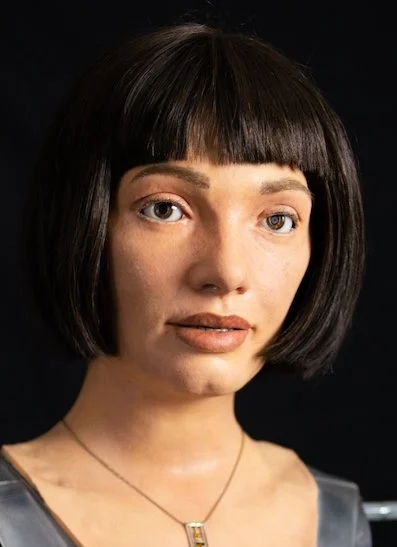
Ai-Da
Copyright 2025 © Ai-Da Robot Studios, www.ai-darobot.com
AI in Video Games: A Turning Point for Developers?
As Ahmed Elgammal notes in this UNESCO article the role of AI varies across artistic disciplines. For video game developers — especially indie creators — the issue often comes down to a practical dilemma: You have an idea, but not the budget for a full art team. Do you abandon the project — or use AI to bring it to life?
The Case Against AI-Generated Art in Games
There are several concerns in the industry regarding AI generated art in Games with the biggest one being: data sourcing.
AI-generated content often draws from existing online material — meaning outputs may be indirectly built on the work of thousands of uncredited artists.
This raises key issues like:
- Copyright infringement
- Lack of compensation
- Blurred authorship
As Baxter puts it: “Questions of authorship and data ownership plague the artificial intelligence narrative”.
The Case For New Opportunities for Game Development
On the other hand, AI opens major opportunities, especially for smaller teams enabling
Indie developers to:
- Create entire worlds and environments
- Design characters and assets
- Prototype ideas quickly
Without these tools, many projects would never move beyond the concept stage due to cost constraints. Rather than limiting creativity, AI could expand the diversity of games being made – removing art as a barrier to entry in the video game industry.
Key AI Art Tools Used in Game Development
- Midjourney: Strong for stylized concept art
- DALL·E 3: Precise and versatile image generation
- Stable Diffusion: Open-source and highly customizable
- Adobe Firefly: Integrated into professional creative workflows
- Scenario: Built specifically for game studios and asset consistency
Is There a Middle Ground?
Several possible paths forward are emerging.
- A dual system: large studios rely on human artists, while smaller developers use AI to overcome resource limitations. However, enforcing this would require complex regulation.
- Reputational pressure. Some studios may step back from AI tools to avoid backlash. Early signs of this can be seen here in the case of Transport Fever 3, developed by Urban Games, and here in the case of Divinity: Original Sin 2 developed by Larian Studios, both of which have publicly responded to concerns around the use of AI in their development processes.
- A more promising approach comes from Red Meat Games, which trains AI models exclusively on its own artists’ work, keeping everything within a controlled creative ecosystem.
In a Nutshell
Even in an era of automation, AI does not create in a vacuum — it begins with human input.
Cases like Ai-Da suggest that AI can produce original work under certain conditions, while studios such as Red Meat Games point toward more ethical implementation models.
Still, one thing remains clear: human direction, taste, and creative vision are essential.
Even when AI generates the output, it is ultimately shaped by human intention.